
This post contains affiliate links. If you buy through them, we may earn a small commission at no extra cost to you. As an Amazon Associate I earn from qualifying purchases. Learn more
Liqueurs are the spice rack of the bar. One small pour can turn a plain drink orange, coffee, almond, berry, or chocolate flavored. They are also where most of the sweetness in many cocktails comes from.
What is it?
A liqueur (pronounced li-KUR) is a spirit that has been sweetened and flavored with fruit, herbs, nuts, spices, coffee, or cream. They usually run from 15% to 40% ABV. In the U.S. you may also see them called cordials. Do not confuse liqueur with liquor, which just means any spirit.
What the law says
In the U.S., liqueur or cordial is a regulated standard of identity. A bottle can only be labeled that way if it meets these rules.
- Sugar: at least 2.5% of the finished product’s weight. A liqueur can be called “dry” if it has less than 10% sugar, but it still needs that 2.5% minimum.
- Strength: there is no general minimum or maximum for the category, though some named types have minimums. A high-strength liqueur is still a liqueur; it is the flavoring and sugar that define it, not low alcohol.
- Rum, gin, or brandy liqueur: at least 30% alcohol (60 proof). The spirit used must be entirely the one named, and its flavor must come through.
- Bourbon or rye liqueur: at least 30% alcohol (60 proof), with rules about the whiskey content and flavor.
- Rock and rye (also rock and bourbon, rock and brandy, rock and rum): at least 24% alcohol (48 proof).
- Named flavors: triple sec and curaçao must be orange flavored; amaretto must be almond flavored.
- “Straight”: never allowed on a liqueur label.
Source: U.S. standards of identity, 27 CFR § 5.150. Flavored versions, specialty products, and named subtypes may have additional or different requirements.
How is it made?
Start with a base spirit, then add flavor and sweetness. Flavor goes in by soaking fruit, herbs, or spices in the spirit (called infusion or maceration), by dripping spirit through them like coffee through grounds (percolation), or by redistilling the spirit with them. Sugar or syrup is added at the end.
What does it taste like?
Sweet, and like whatever the label promises. Quality varies a lot: better liqueurs taste like real fruit or real coffee, cheaper ones can taste like candy.
What are the main styles?
| Family | Examples | Good to know |
|---|---|---|
| Orange | Triple sec, Cointreau, Grand Marnier, curaçao | The most useful family. Blue curaçao is orange liqueur dyed blue. |
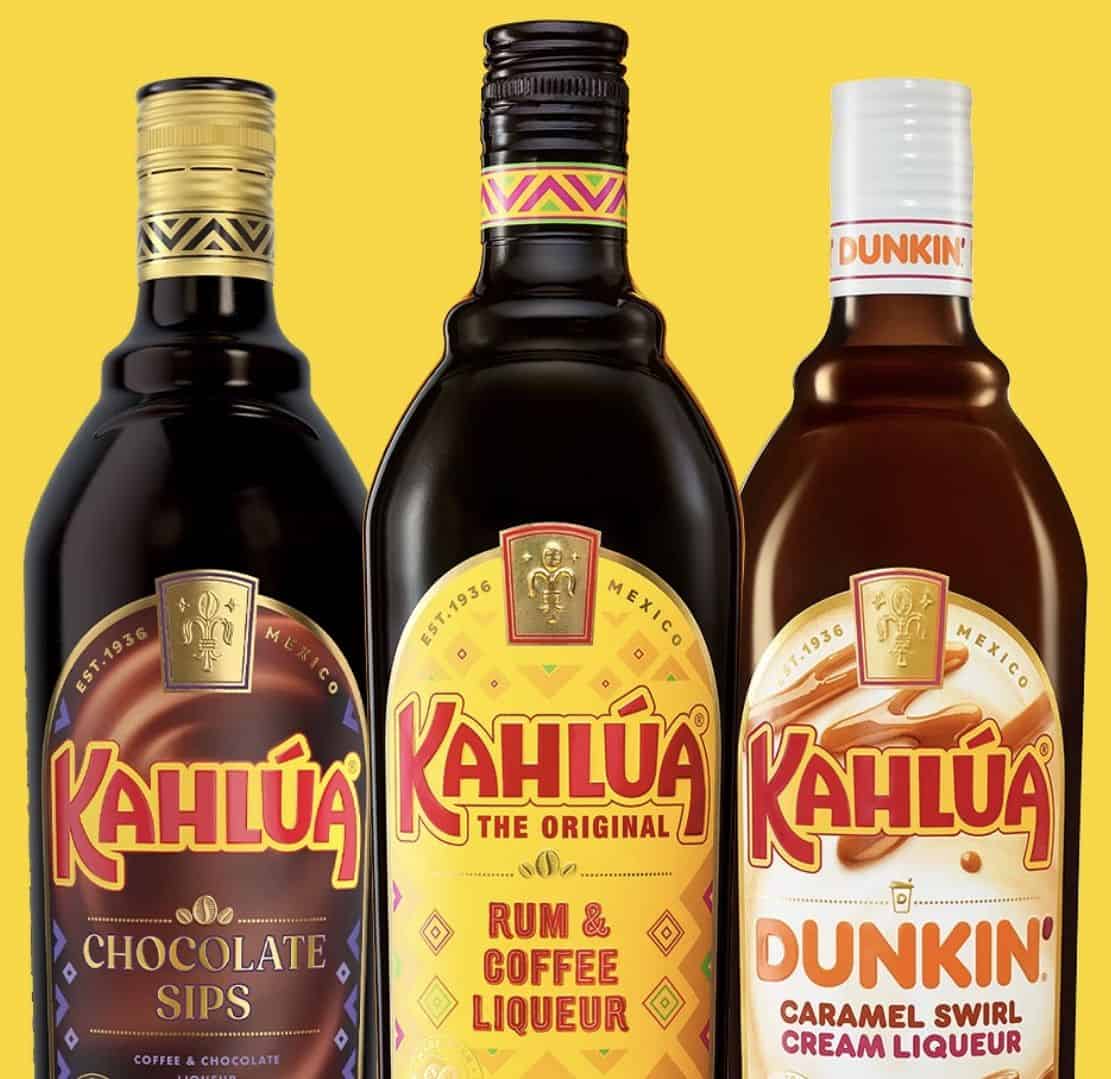
| Coffee | Kahlúa and similar | Around 20% ABV. Key to Black and White Russians. |
| Cream | Irish cream, RumChata | Contain dairy. Check the label for storage. |
| Fruit | Chambord (black raspberry), crème de cassis (black currant), melon liqueur, peach schnapps, limoncello | Add color and fruit flavor in one pour. |
| Nut | Amaretto (almond-flavored), Frangelico (hazelnut) | Mention these to guests with nut allergies. |
| Herbal and bitter | Campari, Aperol, Chartreuse, Bénédictine | Bittersweet and complex. An acquired taste for some. |
| Floral | Elderflower liqueur | A little goes a long way. |
| “Crème de” | Crème de cacao, crème de menthe | Crème means extra sweet, not creamy. There is no dairy in them. |
When would you use each style?
Use a liqueur as the sweet part of a sour (orange liqueur in a Margarita), as a flavor accent (a splash of Chambord in a Lemon Drop), as the star of a simple drink (amaretto over ice, limoncello chilled), or as the base of a creamy dessert drink.
Which mixers work well, and why?
Because liqueurs are already sweet, they love something sour (lemon, lime) or fizzy and dry (club soda, sparkling wine) to keep them from tasting syrupy. Coffee and cream liqueurs pair with milk, cream, and cold brew.
What can you substitute?
- Orange liqueurs swap freely. Triple sec is sweeter and weaker than Cointreau; Grand Marnier adds a brandy richness. Adjust the syrup to taste.
- Dark berry liqueurs (Chambord, crème de cassis, blackberry liqueur) can stand in for each other. The drink will lean raspberry, currant, or blackberry.
- Coffee liqueurs swap with each other easily. Sweetness varies by brand.
- Replacing a liqueur with syrup lowers the alcohol and usually raises the sweetness. Use a little less.
Did you know?
A liqueur can be built on any spirit. Grand Marnier starts with Cognac, Drambuie with Scotch whisky, and RumChata with rum. That makes liqueurs a perfect place to finish: they tie distilling and flavoring together in one bottle.
Try it yourself
- Nutter Butter Cocktail
- Chocolate Raspberry Martini
- Snake in the Grass
- Iced Baileys Hot Chocolate
- Violet Negroni
- Frozen Mocha
- Haunted Blue Moon
- RumChata Apple Crisp Deux
- Peach Sparkler
- Tropical Lychee Rum Punch
- Baby Guinness
- Cherry Rose Mudslide Deux
See all 281 recipes in Brandy and Liqueur Drink Recipes
Shop at Total Wine & More: LiqueursCream liqueurs
Check prices or order for pickup at Total Wine & More, if there is one near you. If Total Wine & More can’t ship to your state, an item may show as “unavailable.” Click View product to see whether you can pick it up or get same-day delivery. These are affiliate links, so we may earn a small commission at no extra cost to you.
Want to go deeper?
Want to learn more about liqueurs? Try these books.
- Amaro by Brad Thomas Parsons. All about bittersweet herbal liqueurs like Campari and Aperol, with plenty of easy cocktails.
- The Drunken Botanist by Amy Stewart. The plants behind every bottle, from agave and juniper to sugarcane and barley. Great reading for curious minds.