
This post contains affiliate links. If you buy through them, we may earn a small commission at no extra cost to you. Learn more
Welcome to Spirited Snowbirds!

This is a free cocktail tasting. Tonight we’re ringing in the New Year the snowbird way, at a sensible hour. We’ll toast midnight in seven places around the world, talk a little about how each drink is made and what goes into them, and give you the recipes so you can make the ones you like at home.
These are tasting portions, not full drinks. Each full cocktail is being divided among four people. Even so, if you taste everything tonight, it can add up to the equivalent of roughly three to four standard drinks, depending on the spirits used and how much of each sample you finish.
So pace yourself, drink some water, have something to eat, and feel perfectly free to skip anything you don’t want. And please don’t drive afterward, including a golf cart. Walk, totter, stagger with dignity, or arrange a ride back to your trailer.
There is absolutely no charge for Spirited Snowbirds. We need to keep the tasting completely separate from the bar to protect the resort’s liquor license. If you like one of tonight’s drinks and want a full-size cocktail, you can order one from the bar.
If you would like to contribute something to a future Spirited Snowbirds, bring a snack to share. Snacks are always welcome.
Some of tonight’s drinks contain citrus, grapefruit, dairy, honey, coffee, food coloring, coconut, or tree nuts (hazelnuts), and the vermouth is a wine that may contain sulfites. Grapefruit can also interact with some medications. Please ask before tasting if you have an allergy or dietary concern.
The idea here is to try things you might never order for yourself, learn a little, compare recipes, and have some fun. Now, on to the important research.
Tonight’s menu
| Drink | Base | What it teaches | Contains |
|---|---|---|---|
| Returning Favorite Surprise Guest. | |||
| Australia: Japanese Slipper | Midori and Cointreau | The equal-parts sour | Citrus, food coloring (Midori) |
| Brazil: Caipirinha | Cachaça, Brazil’s sugarcane spirit | Muddling: pressing the juice out of fresh fruit | Citrus |
| Puerto Rico: Coquito shot | Bottled coquito, a coconut cream liqueur | The store-bought shortcut: shake it, chill it, dust it with cinnamon | Dairy, coconut |
| New York: Manhattan | Rye or bourbon and sweet vermouth | Vermouth is wine, so keep it in the fridge | Wine (may contain sulfites) |
| Mexico: Paloma, full vs. light | Tequila | Resolutions we can keep: how to lighten a drink | Citrus, grapefruit |
| Italy: Baileys Christmas Shot | Baileys and vodka | Dressing up a drink with an Italian Nutella and hazelnut rim | Dairy, tree nuts (hazelnuts), coffee |
| Scotland: Creamy Rusty Nail | Scotch and Drambuie | The creamy dessert drink | Dairy, honey |
| Going home: a goodbye mocktail | Nonalcoholic | A toast for the walk home | To come |
Why midnight around the world?
Somebody, somewhere, is always toasting midnight. So tonight we follow it around the globe, one drink per stop, and nobody has to stay up past nine. Midnight in Scotland happens at about 6 p.m. our time. Close enough.
First stop, Australia: Japanese Slipper
Australia is one of the first places on Earth to ring in the New Year. When the fireworks go off over Sydney Harbour at midnight, it is about 7 a.m. here on New Year’s Eve morning. So we start Down Under, with a drink that sounds Japanese but was actually invented in Melbourne in 1984 by Jean-Paul Bourguignon at Mietta’s Restaurant.
The Japanese Slipper is an equal-parts sour: Midori melon liqueur, Cointreau, and fresh lemon juice, shaken and strained over a cherry. It is bright green, short, and sweet-tart. Equal parts is about the easiest formula there is to remember, so it is a good one to learn first.
Ingredients
- 2 oz Midori melon liqueur
- 2 oz Cointreau
- 2 oz fresh lemon juice
- Ice
- A maraschino cherry for each glass, and a thin slice of honeydew melon for garnish (optional)
Method
- Drop a cherry into the bottom of each glass.
- Shake the Midori, Cointreau, and lemon juice hard with ice.
- Strain over the cherry, and hang a slice of honeydew on the rim if you like.
It is sweeter and a little stronger than it tastes, so sip slowly. For a lighter version, top each glass with a splash of club soda. Full recipe: Japanese Slipper.
Brazil: Caipirinha
Midnight in Rio de Janeiro arrives at 9 p.m. our time, which is right about our bedtime anyway. Millions of people pack Copacabana Beach dressed in white for good luck, jump over seven waves to make seven wishes, and toss flowers into the sea. We will skip the waves and go straight to the national drink.
The Caipirinha is just three ingredients: cachaça, fresh lime, and sugar. Cachaça (say ka-SHA-sah) is Brazil’s sugarcane spirit. It is a cousin of rum, but it is made from fresh sugarcane juice instead of molasses, so it tastes grassier and a little funky, in a good way.
Tonight’s skill: muddling. Muddling just means pressing fruit to squeeze out its juice and the oils in the peel. Press and twist gently. You want lime juice, not lime mush, and grinding the peel too hard makes the drink bitter.
Ingredients
- 3 oz cachaça
- 1 lime, cut into 8 wedges
- 1 tablespoon superfine sugar
- Crushed or cracked ice
Method
- Trim the white strip of pith from the center of each lime wedge.
- Muddle the lime wedges and sugar gently in a shaker until the sugar dissolves in the juice.
- Add the cachaça and a scoop of ice, shake briefly, and strain into the tasting cups.
At home, pour it all into a rocks glass, ice and lime included. No cachaça? White rum works, and Brazilians call that version a Caipiríssima. Full recipe: Caipirinha.
Puerto Rico: a Coquito shot
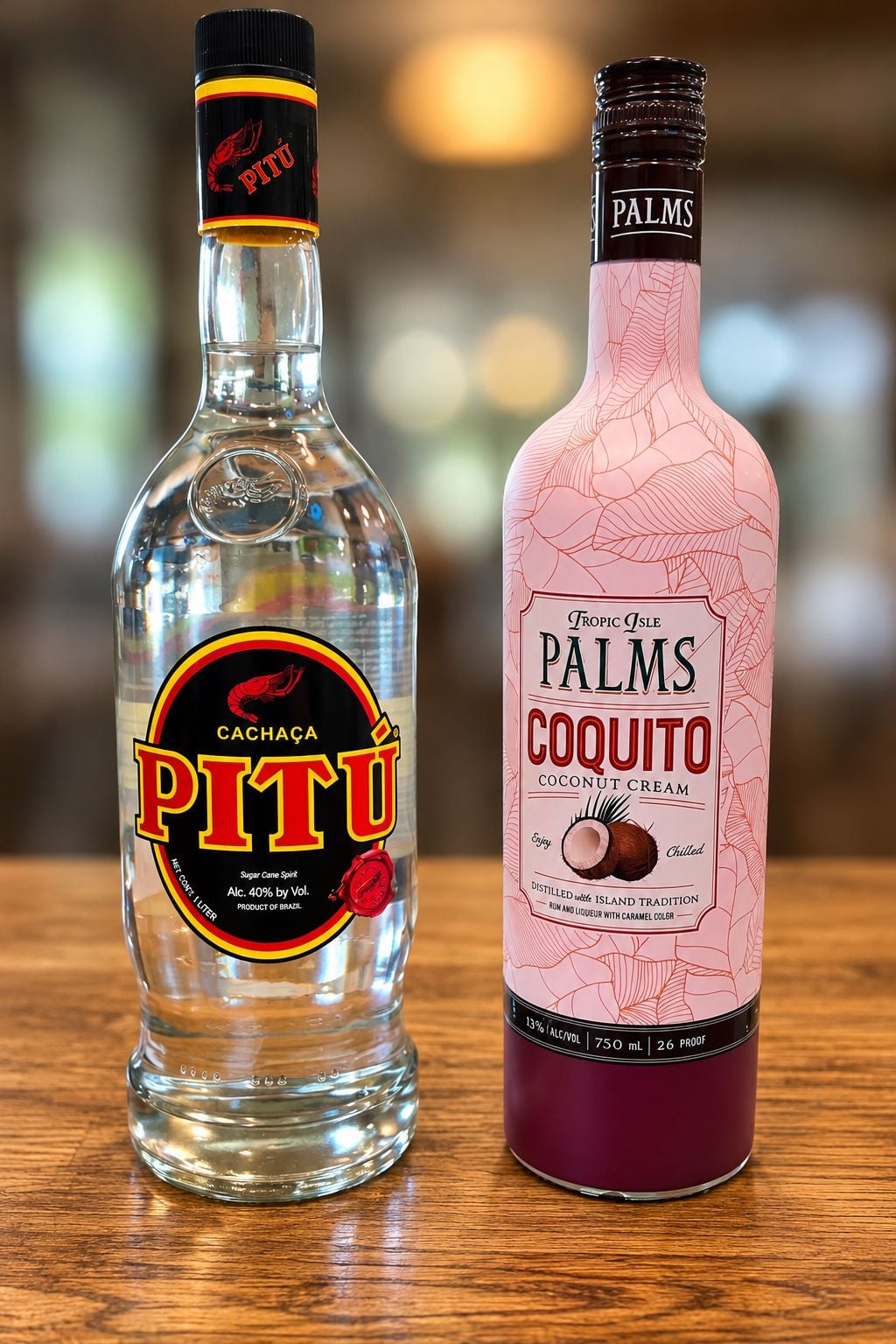
Midnight in San Juan arrives at 10 p.m. our time. Puerto Rico has one of the longest Christmas seasons anywhere. It keeps going past Three Kings Day on January 6 and wraps up in mid-January, so we are right on time for the island’s favorite holiday drink.
Coquito (say ko-KEE-toe) means “little coconut.” Families make it with coconut cream, sweetened condensed milk, rum, cinnamon, and vanilla, and every grandma swears hers is the best. People call it Puerto Rican eggnog, though most recipes skip the eggs.
Tonight’s skill: the store-bought shortcut. Homemade coquito takes some work, but bottled coquito is ready to pour. Shake the bottle well, since the cream settles, and serve it ice cold. A dusting of cinnamon on top makes it look homemade.
Ingredients
- 4 oz bottled coquito, such as Palms or Bacardi, well chilled
- Ground cinnamon, for dusting
- A cinnamon stick, broken into small pieces, for garnish (optional)
Method
- Shake the bottle well.
- Pour 1 oz into each small glass or shot glass.
- Dust with cinnamon and add a piece of cinnamon stick, if you like.
Everyone gets their own little pour, so there is no splitting. It is one of the gentler drinks tonight, too: bottled coquito is usually about 13% alcohol, close to a glass of wine. Want to make it from scratch? Full recipe: Coquito.
New York: a Manhattan for the ball drop
When the ball drops in Times Square, we raise the drink named after the borough. A Manhattan is whiskey, sweet vermouth, and bitters, stirred, not shaken, so it stays smooth and clear.
Ingredients
- 4 oz rye or bourbon
- 2 oz sweet vermouth
- 2 to 4 dashes Angostura bitters
- Ice
- Cocktail cherry, for garnish
Method
- Add the whiskey, vermouth, and bitters to a mixing glass with ice.
- Stir until well chilled, about 20 to 30 seconds.
- Strain into a chilled coupe, or over fresh ice in a rocks glass, and add a cherry.
Tonight’s skill: vermouth is wine
This is the tip that will save you money. Vermouth is wine with a little extra alcohol and herbs added. Once you open it, it starts to go stale, just like a bottle of wine left on the counter.
- Keep it in the fridge. An opened bottle stays good for a month or two there. On the counter, it can taste flat and sour within weeks.
- Buy the small bottle. Unless you make a lot of Manhattans, a 375 ml bottle is plenty.
- Taste it first. If your vermouth has been sitting on the shelf since last winter, it may be the reason your Manhattan tastes off.
Rye makes it spicier and drier, and bourbon makes it rounder and sweeter. Full recipe: Manhattan.
Resolutions we can keep
It is January, and somebody at your table has already promised to cut back. Good news: you do not have to give up cocktails to lighten them. Most of the calories in a drink come from two places, the alcohol and the sugar. Here are three easy ways to trim both:
- Swap the syrup. Trade sugary sodas, juices, and syrups for fresh juice, a sugar-free soda like Fresca, or half the simple syrup. Most drinks taste fine with less sugar than the recipe calls for.
- Stretch it with soda. Club soda and plain sparkling water add fizz and volume with zero calories. A taller drink also takes longer to finish.
- Use less liqueur (and less spirit). Liqueurs are sweet and strong, so cutting them by a third saves a lot. Dropping the spirit from 2 oz to 1 1/2 oz helps too, and most people never notice.
Mexico: Paloma, full vs. light
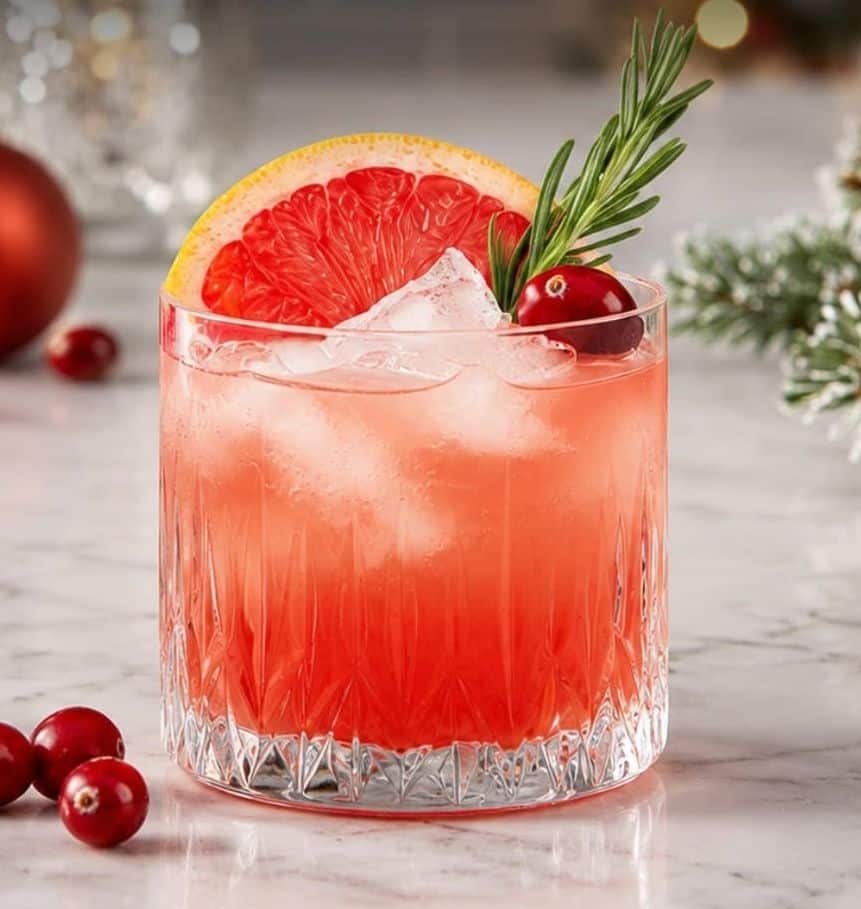
Mexico City shares our time zone, so this is our midnight toast. Many Mexican families eat twelve grapes at midnight, one for each month, and make a wish with each one. We will stick to grapefruit.
The Paloma is the most popular tequila drink in Mexico: tequila, lime, and grapefruit soda. Tonight we make it two ways, the classic version and a lighter one using all three tricks above. Taste them side by side. Can you tell which one is light?
Classic Paloma
- 2 1/2 oz 100% agave tequila
- 1 1/2 teaspoons fresh lime juice
- A pinch of salt
- 5 oz pink grapefruit soda, such as Squirt or Jarritos
- Ice
Light Paloma
- 1 1/2 oz 100% agave tequila
- 1/2 oz fresh lime juice
- A pinch of salt
- 2 oz fresh grapefruit juice
- 3 oz club soda
- Ice
Method (both)
- Pour the tequila and lime juice into a tall glass.
- Fill the glass with ice and add the pinch of salt.
- Add the grapefruit soda, or the grapefruit juice and club soda, and stir gently.
The classic has about 230 calories in the whole batch. The light one has about 125, nearly half, with a little less alcohol too. Full classic recipe: Paloma.
A note on grapefruit: grapefruit can interact with some medications, including some cholesterol and blood pressure drugs. If your doctor has told you to avoid grapefruit, skip the Palomas tonight.
Italy, for something sweet: Baileys Christmas Shot
Next stop, Italy, for something sweet. The name says Christmas and the bottle says Irish, but the dressing on this drink is Italian. Nutella and Ferrero Rocher both come from Ferrero, a family company in Alba, in northern Italy, and Nutella first went on sale there in 1964. Lots of people guess it is Australian, since Aussies love the stuff, but it is as Italian as espresso.
It is called a shot, but it is really a little sipper: Baileys, espresso, and a touch of vodka shaken cold and poured into a glass rimmed with Nutella and crushed hazelnuts, with a Ferrero Rocher perched on top.
Ingredients
- 1 shot espresso, about 1 oz, cooled a bit
- 1 oz vodka
- 1 oz Baileys Irish Cream
- Ice
- Nutella and finely crushed hazelnuts, for the rim
- Ferrero Rocher, cut in half, for garnish
Method
- Warm a spoonful of Nutella for a few seconds so it spreads easily. Spread it around the rims of the cups and roll them in crushed hazelnuts.
- Shake the espresso, vodka, and Baileys hard with ice for about 15 seconds.
- Strain into the rimmed cups and top each with half a Ferrero Rocher on a pick.
This makes about 3 oz, enough for four small tasting cups. No espresso machine? Cold brew concentrate works 1:1, and the full recipe has more swaps: Baileys Christmas Shot.
Scotland: a creamy Rusty Nail for Hogmanay
We end in Scotland, where the New Year is called Hogmanay and the party goes on for days. The Rusty Nail is a 1960s favorite made with just two bottles: Scotch and Drambuie, a Scotch liqueur sweetened with honey and herbs. Tonight we shake it with half-and-half to turn it into dessert. Three ingredients, no prep, and it is rich, so we save it for last.
Ingredients
- 2 oz blended Scotch
- 1 oz Drambuie
- 3 oz half-and-half
- Ice
- Grated nutmeg, for garnish (optional)
Method
- Add the Scotch, Drambuie, and half-and-half to a shaker with ice.
- Shake hard for about 15 seconds.
- Strain into a small glass and dust with nutmeg, if you like.
Prefer the classic? Skip the half-and-half and stir 1 1/2 oz Scotch with 3/4 oz Drambuie over ice. It is much stronger, so it makes a better nightcap than a tasting pour.
Going home: a goodbye mocktail
Every tasting ends with a nonalcoholic drink for the walk home. Ours is still a surprise.
Shopping list
Shop at Total Wine & More: Rye whiskeyVermouth and aperitifsTequilaScotchLiqueurs
Check prices or order for pickup at Total Wine & More, if there is one near you. If Total Wine & More can’t ship to your state, an item may show as “unavailable.” Click View product to see whether you can pick it up or get same-day delivery. These are affiliate links, so we may earn a small commission at no extra cost to you.
Amounts below make one full recipe of each drink, which serves four tasters. The Paloma is made twice, classic and light. Multiply by the number of tables or rounds. The returning favorite and the goodbye mocktail are not included.
Spirits and liqueurs
- Rye or bourbon, 4 oz
- Sweet vermouth, 2 oz (a 375 ml bottle is plenty; refrigerate it after opening)
- Cachaça, 3 oz (or white rum)
- Midori melon liqueur, 2 oz
- Cointreau, 2 oz
- 100% agave tequila, 4 oz (for both Palomas)
- Blended Scotch, 2 oz
- Drambuie, 1 oz
- Vodka, 1 oz
- Baileys Irish Cream, 1 oz
- Bottled coquito, such as Palms or Bacardi, 4 oz
Mixers and garnishes
- Lemons, 2 (about 2 oz juice)
- Limes, 2 (one for 3/4 oz juice, one cut into wedges for the Caipirinha)
- Pink grapefruit soda, such as Squirt or Jarritos, 5 oz
- A pink grapefruit (2 oz fresh juice)
- Club soda, 4 oz
- Superfine sugar, 1 tablespoon
- Half-and-half, 3 oz
- Espresso, 1 shot (or cold brew concentrate, 1 oz)
- Nutella and finely crushed hazelnuts, for the rims
- Ferrero Rocher, 2 (cut in half)
- Angostura bitters
- Cocktail cherries
- A small honeydew melon, for garnish (optional)
- Salt
- Nutmeg, for garnish (optional)
- Ground cinnamon and a cinnamon stick
- Lots of ice
Setup notes
- Chill the club soda and grapefruit soda well, and open them right before pouring so they stay fizzy. Bubbles always go in last.
- Keep the vermouth and the coquito in the fridge, and chill the coupes for the Manhattan.
- Squeeze the lemon, lime, and grapefruit juice before guests arrive, and cut the Caipirinha lime into wedges. Slice the honeydew and drop a cherry in each Japanese Slipper cup ahead of time.
- For the Paloma comparison, pour each version into matching cups marked A and B, and keep the bottles out of sight until everyone has guessed.
- Gear: shaker, Hawthorne strainer, muddler, mixing glass, bar spoon, jigger, citrus juicer, coupes, and tall glasses.
- Use small tasting cups and a card for each drink listing its ingredients and allergens. Flag the Palomas for grapefruit, the Rusty Nail for dairy, the Christmas Shot for dairy, nuts, and coffee, and the Coquito for dairy and coconut.
- Put a water pitcher and snacks on every table.
- Brew the espresso ahead and chill it. Rim the Christmas Shot cups with Nutella and hazelnuts early and refrigerate them so the rim sets.
- Serve the drinks in menu order and save the creamy Rusty Nail for last.
What we learned
We will fill this in after the tasting: which drinks were the favorites, whether anyone could spot the light Paloma, and tips for anyone hosting their own.